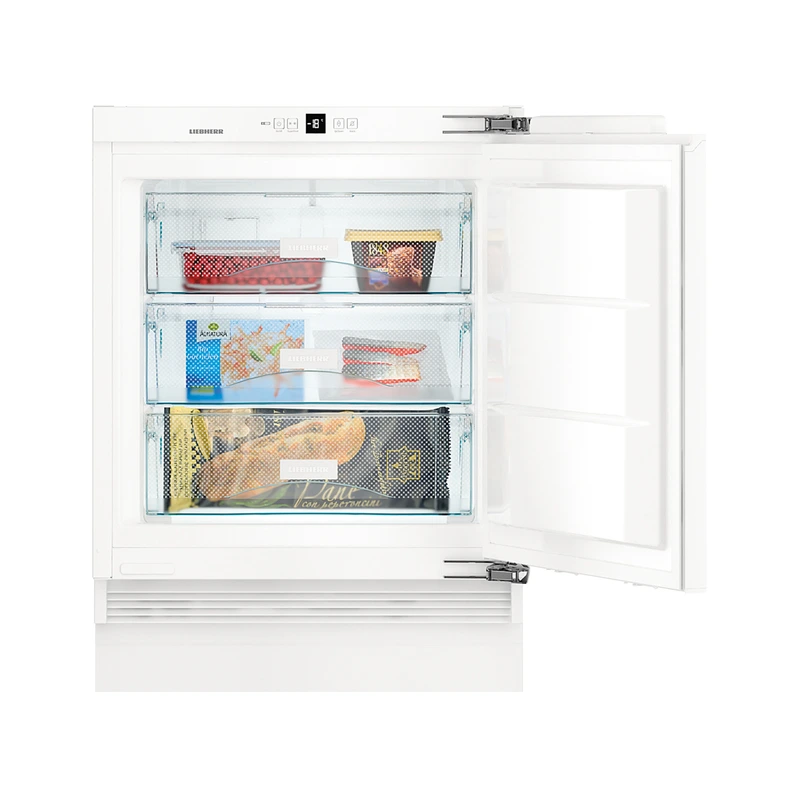
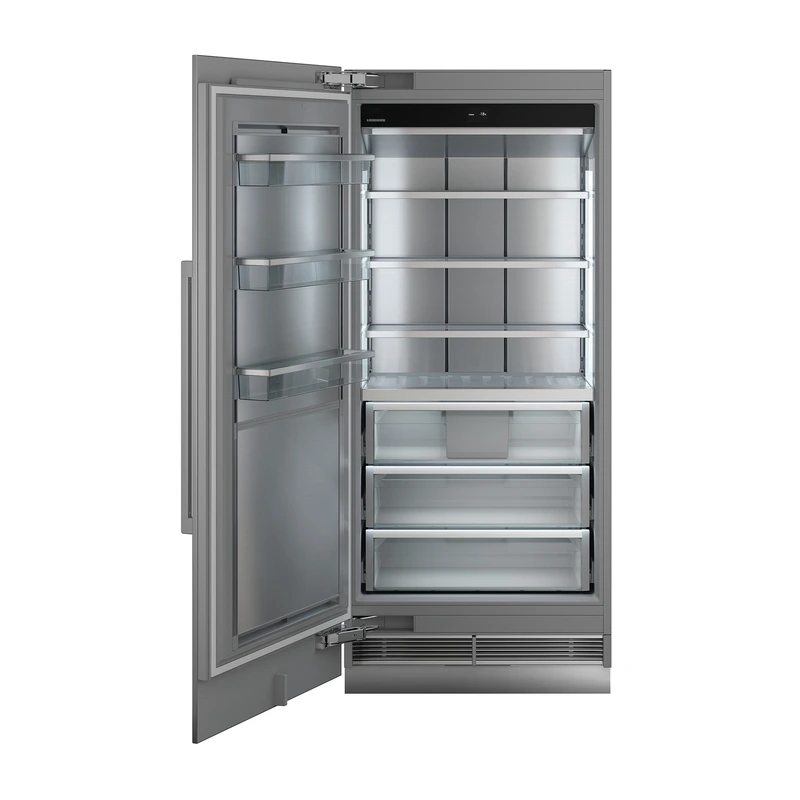
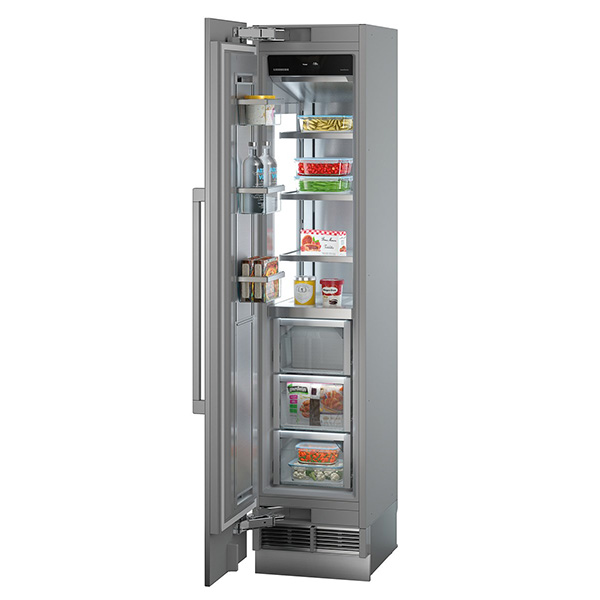
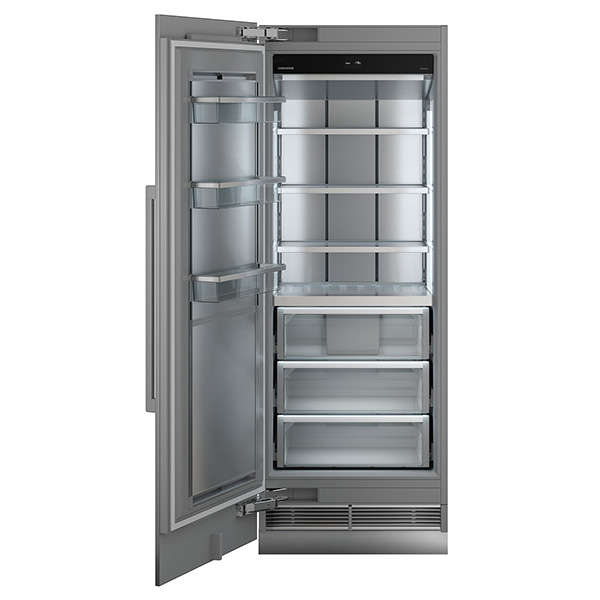
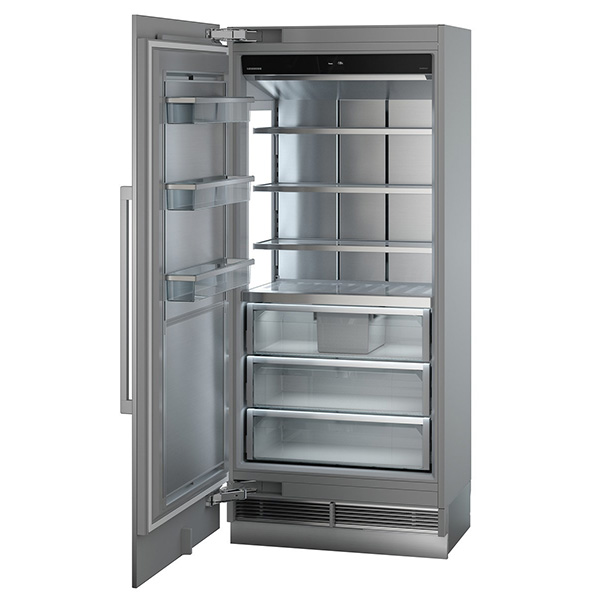
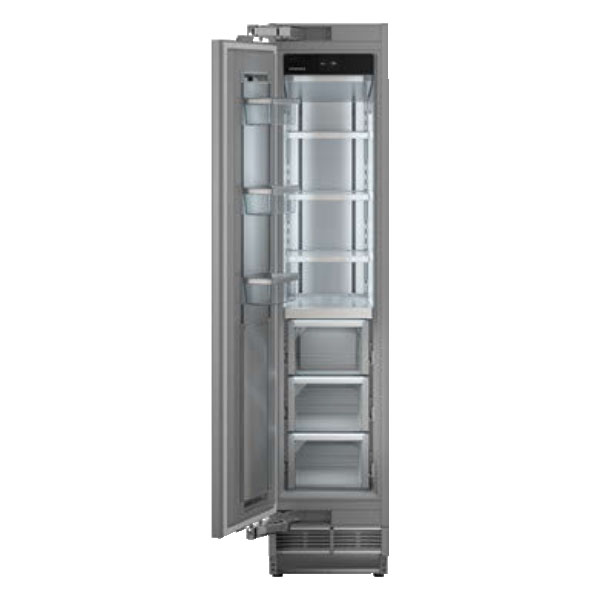
Installation space and recess requirements
The floor must be level, even and made of a hard, rigid material. It must be capable of bearing the weight of the appliance plus approximately 218 kg to 544 kg of food, depending on model net capacity. The floor in the installation area must be at the same height as the rest of the room and arranged so that ventilation openings remain clear.
Recess dimensions must be correctly measured and the power socket must be located in the correct position. The appliance height including packaging and pallet is 2285 mm, which must be considered when transporting the appliance to the installation site.
When planning the recess, the top and carcass walls should line up flush with the appliance at a depth of at least 102 mm from the outside edge and be at least 16 mm thick. Because parts of the recess are visible when the door is opened, matching finishes with a minimum depth of 76 mm at the top and sides are recommended.
Monolith appliances are designed for flush installation in units with a depth of 635 mm using stainless steel panels or customer-specific panels. Custom panels must not exceed the maximum permitted panel weight for the door hinge and may be made of wood up to 25 mm thick. A decorative trim is supplied to cover the gap between the appliance and unit side walls.
Because the appliance depth is 610 mm, it may be installed in standard European 610 mm deep units or deeper 635 mm cut-outs. For flush installation, inset door panel dimensions must be used. For other installation options, door spacing requirements must be observed.
To prevent potential damage, the appliance should stand for one hour at the installation location before switching on, so that fluids in the coolant and lubrication system can be evenly distributed.
Adjustable feet and plinth panel
The adjustable feet are fully retracted for the minimum height. The height is raised by turning the feet from the front until the appliance contacts the anti-tipping device. To achieve a plinth panel height of 102 mm, the feet must be raised by 6–8 mm. For higher plinth panels, the feet can be raised by up to 19 mm.
Monolith appliances are ventilated entirely via the plinth panel. Door panels must close at least 102 mm above the floor and the grille in the plinth panel must not be obstructed. An optional 102 mm high stainless steel plinth panel is available in widths corresponding to individual models and Side-by-Side combinations from 45.7 cm to 182.8 cm.
Wall spacers/air separators supplied with the appliance must be fitted to separate warm exhaust air from incoming fresh air. The plinth panel position depth can be varied and is assembled using a pre-assembled adhesive joint on the appliance.
Door spacing and panel installation
The doors, including handles, must not collide with adjoining cupboards, work surfaces, walls or other kitchen elements. If there is a risk of collision, the supplied 90° door opening limiter can be used. The opening angle is 115° as delivered and can be limited to 90° by inserting a peg into the hinge.
Alternative solutions include reducing panel thickness if greater than 19 mm, repositioning colliding elements, or using a stopper to protect adjacent units. The minimum permitted gap between panels is 4 mm.
For Side-by-Side configurations, if the distance between appliances is less than 102 mm, a Side-by-Side set is required. Where doors open against each other, a minimum distance of 154 mm is necessary when using a 90° door opening limiter. For three-unit combinations, different arrangements are possible but may lead to door collisions if minimum distances are not observed.
Electrical safety
The appliance must be operated using alternating current and within the permitted voltage and frequency for the country. Power sockets must be earthed, electrically protected and easily accessible, and must not be located behind the appliance. A separate circuit is recommended to prevent defrosting caused by other appliances.
The appliance must not be connected to unearthed sockets, extension cables, multi-sockets or inverters due to the risk of electric shock, overheating or fire. The refrigerant circuits have been checked for tightness and the appliance meets applicable safety regulations.
Water connection and IceMaker
For appliances fitted with InfinitySpring or IceMaker, a water supply connection is required. Water pressure must be between 2.8 and 6.2 bar. Only the supply hose delivered with the appliance may be used. A shut-off valve must be installed between the hose line and the mains water supply and must not be located behind the appliance.
The IceMaker is intended solely for producing ice cubes in normal household quantities and must only be used with water that meets local drinking water regulations. If water hardness is high, a water softener is recommended. A filter must be used if solids such as sand are present. All devices and systems used to supply water must comply with local provisions.
All appliances fitted with InfinitySpring or IceMaker have a water filter in the front section of the appliance base. The filter must be replaced regularly. An InfinitySwipe alarm reminds the user when replacement is due. Water connection work must not be performed while the appliance is connected to the electrical socket, and all work on InfinitySpring/IceMaker must only be undertaken by customer service employees or other trained individuals.
The manufacturer assumes no responsibility for damage caused by devices or water pipes located between the solenoid valve and the water supply.
Ambient temperature and operation
The appliance is intended for refrigerating, freezing and storing food and for making ice (if equipped). It is designed for operation within the ambient temperature range specified by climate class SN–T, from 10 °C to 43 °C. It must not be operated outside this range to ensure optimal cooling performance.
Secure mounting
To prevent the appliance from tipping over after installation, the anti-tipping device positioned at the base must be secured to the floor or wall. Information on secure mounting is provided in the installation instructions.
Side-by-Side installation options
The appliance may be installed individually, Side-by-Side in a single fitted unit, or Side-by-Side in separate units with other Monolith refrigerators, freezers or wine cabinets. A Side-by-Side set is required if spacing between appliances or dividing walls is less than 102 mm. For back-to-back door positioning, a minimum spacing of 154 mm is required.
When sizing fitted units, the thickness of the door panel and handle must be taken into account. When combining three units, installation with two Side-by-Side sets or with an additional carcass side of at least 16 mm is possible, but certain configurations may lead to door collisions if minimum spacing is not maintained.